
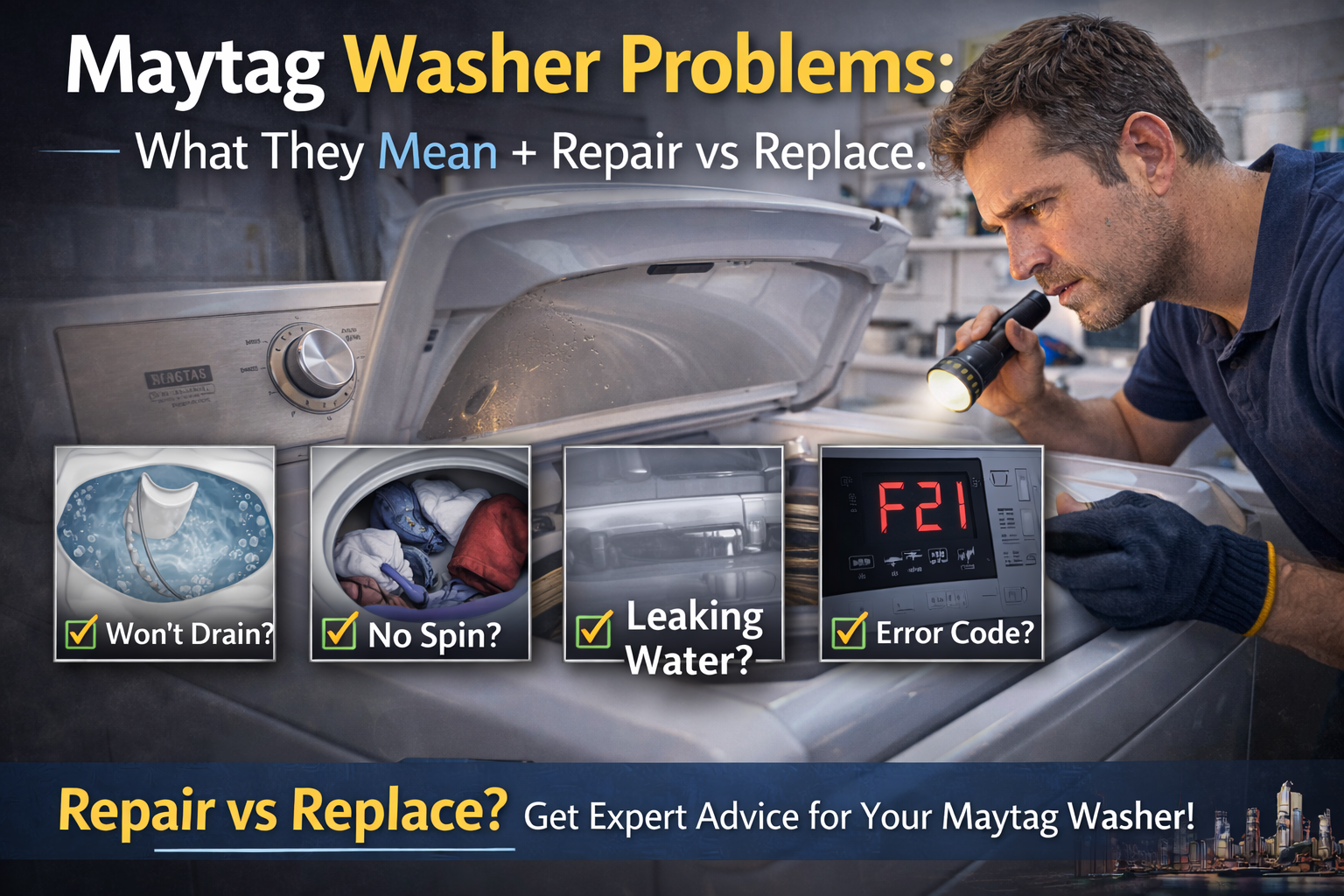
Maytag washers have long been known for durability, performance, and strong cleaning power. Whether you own a top-load model with an agitator or a high-efficiency front-load washer, Maytag machines are built to handle heavy laundry demands. However, even the most reliable appliances develop problems over time.
If your Maytag washer is making unusual noises, failing to spin, leaking water, displaying error codes, or not draining properly, it can disrupt your entire routine. In busy households—especially in apartments or homes where laundry space is limited—washer problems need fast answers.
At Dial Appliance, we frequently diagnose and repair Maytag washers. This comprehensive guide explains the most common Maytag washer problems, what those issues typically mean, troubleshooting steps you can safely take, and how to decide whether to repair or replace your unit.
Understanding How Maytag Washers Work
Before diving into specific problems, it helps to understand the basic components of a Maytag washer:
-
Motor
-
Drive belt or direct drive system
-
Drain pump
-
Water inlet valve
-
Lid switch or door lock
-
Control board
-
Suspension system
-
Agitator or impeller
-
Heating element (in some models)
-
Temperature sensor
When one or more of these components fails or becomes obstructed, performance issues begin to appear.
1. Maytag Washer Not Draining
One of the most common Maytag washer problems is failure to drain.
What It Means
When water remains in the drum at the end of a cycle, it usually indicates a drainage system issue.
Common Causes
-
Clogged drain pump filter
-
Blocked drain hose
-
Faulty drain pump
-
Control board malfunction
-
Plumbing obstruction
Troubleshooting Steps
-
Unplug the washer.
-
Inspect and clean the drain pump filter (if accessible).
-
Check the drain hose for kinks or clogs.
-
Confirm standpipe or sink drain is not blocked.
-
Run a drain and spin cycle with a smaller load.
If water still does not drain, the pump motor may need replacement.
2. Maytag Washer Not Spinning
If your washer fills with water but won’t spin, clothes will come out soaking wet.
What It Means
A spin failure often points to mechanical or balance issues.
Possible Causes
-
Unbalanced load
-
Lid switch failure
-
Broken drive belt
-
Motor coupling damage
-
Worn suspension rods
-
Faulty control board
Quick Checks
-
Redistribute clothing evenly.
-
Remove heavy items.
-
Ensure washer is level.
-
Listen for motor noise without drum movement.
Persistent spin failure often requires professional diagnostics.
3. Washer Making Loud Noises
Unusual noises are an early warning sign.
Common Sounds and What They Mean
-
Grinding: Drain pump obstruction or bearing failure
-
Thumping: Unbalanced load or suspension wear
-
Squealing: Worn belt
-
Clicking: Lid switch or control relay issue
-
Rumbling: Worn drum bearings
Ignoring noise can lead to more extensive damage.
4. Washer Leaking Water
Water pooling around the washer should be addressed immediately.
Possible Causes
-
Damaged door seal (front-load models)
-
Loose hose connections
-
Cracked drain hose
-
Faulty water inlet valve
-
Overuse of detergent
-
Pump housing crack
What to Check
-
Inspect door gasket for tears.
-
Tighten hose connections.
-
Look for cracks in hoses.
-
Confirm detergent type and amount.
Leaks should never be ignored due to potential floor damage.
5. Maytag Washer Not Filling with Water
If your washer starts but doesn’t fill, the issue likely involves water supply components.
Common Causes
-
Closed water valves
-
Clogged inlet screens
-
Low water pressure
-
Faulty water inlet valve
-
Pressure switch malfunction
Steps to Try
-
Ensure valves are fully open.
-
Remove and clean inlet screens.
-
Check hose condition.
-
Confirm adequate water pressure.
If filling issues persist, inlet valve replacement may be necessary.
6. Washer Stuck Mid-Cycle
When your washer stops unexpectedly, it can indicate electronic or mechanical failure.
Possible Causes
-
Control board malfunction
-
Door lock failure
-
Overheating motor
-
Power fluctuation
-
Error code activation
Resetting the washer by unplugging for 5 minutes may temporarily resolve the issue.
7. Error Codes on Maytag Washers
Modern Maytag washers display error codes to indicate faults.
Common Error Codes
-
F21 – Long drain error
-
F5 E2 – Door lock issue
-
F8 E1 – Water supply problem
-
LF – Long fill
-
SD – Excess suds detected
-
UL – Unbalanced load
Each code points to a specific system needing attention.
8. Washer Vibrating Excessively
Excessive vibration can cause long-term structural damage.
What It Means
-
Washer not level
-
Worn suspension rods
-
Weak shock absorbers
-
Uneven flooring
Ensuring proper leveling is the first step.
9. Washer Not Turning On
If the washer won’t power on:
Possible Causes
-
Tripped breaker
-
Faulty power cord
-
Control board failure
-
Blown thermal fuse
-
Defective user interface
Professional electrical diagnostics may be required.
10. Washer Smells Bad
Odors are common in front-load models.
Causes
-
Mold buildup
-
Detergent residue
-
Poor ventilation
-
Clogged filter
Running a cleaning cycle with washer cleaner and leaving the door open after use can help.
Repair vs Replace: How to Decide
When facing Maytag washer problems, the big question becomes whether to repair or replace.
Repair Makes Sense If:
-
Washer is under 8–10 years old
-
Repair cost is less than 50% of replacement
-
Issue involves a single component
-
Unit is high-end or built-in
-
Installation complexity is high
Replace May Be Better If:
-
Washer is 12–15 years old
-
Multiple major components failing
-
Control board and motor both malfunctioning
-
Repair cost approaches replacement value
-
Frequent breakdown history
Average Lifespan of a Maytag Washer
Most Maytag washers last:
-
10–14 years with proper maintenance
-
Longer with light usage
-
Shorter with heavy daily loads
Proper maintenance extends lifespan significantly.
Cost Factors for Maytag Washer Repairs
Several variables influence repair costs:
Type of Part
-
Drain pump: Moderate cost
-
Motor: Higher cost
-
Control board: Higher cost
-
Lid switch: Lower cost
Labor Complexity
Front-load models often require more labor than top-load.
Accessibility
Stacked or built-in units increase labor time.
Model Age
Older models may have limited part availability.
Preventative Maintenance Tips
To reduce future problems:
-
Clean drain filter every 3–6 months
-
Use proper detergent (HE if required)
-
Avoid overloading
-
Inspect hoses annually
-
Keep washer level
-
Leave door open after use (front-load)
-
Schedule periodic professional inspection
Preventative maintenance reduces breakdown frequency.
Common Maytag Washer Models Serviced
-
Maytag Bravos series
-
Maytag Centennial
-
Maytag front-load models
-
High-efficiency top-load washers
-
Stacked washer-dryer units
Each model may have unique component layouts and diagnostic codes.
Frequently Asked Questions
Why does my Maytag washer stop mid-cycle?
Possible door lock or control board issue.
Why is my washer not draining but still spinning?
Drain pump obstruction or failure.
Can I fix a Maytag washer myself?
Basic cleaning and leveling are safe, but electrical and motor repairs require professionals.
How long does a typical repair take?
Many issues can be diagnosed and repaired in one visit.
Is it worth repairing an older washer?
Depends on age, condition, and repair cost compared to replacement.
When to Call for Professional Maytag Washer Repair
Call a technician if:
-
Washer repeatedly shows error codes
-
Water leaks continue
-
Motor noises persist
-
Electrical issues occur
-
Washer will not drain or spin
-
Unit shuts off unexpectedly
Ignoring warning signs often leads to larger failures.
Final Thoughts: Repair with Confidence
Maytag washers are built for durability, but like all appliances, they require maintenance and occasional repair. Understanding what common problems mean helps you make informed decisions and avoid unnecessary replacement.
If your Maytag washer is experiencing issues, professional diagnostics ensure the correct repair is made the first time. Whether it’s a simple pump replacement or a more complex control board issue, timely service prevents additional damage.
If you’re unsure whether to repair or replace your washer, a qualified technician can assess the condition and provide clear guidance based on age, cost factors, and overall performance. Taking action early helps extend the life of your appliance and protects your investment.
Contact Dial Appliance Service today to schedule your appointment and experience why we’re Brooklyn’s most trusted choice for “Appliance Repair.” Schedule Your Appliance Repair Service Now at (718) 368-1512 or Contact Us Now!